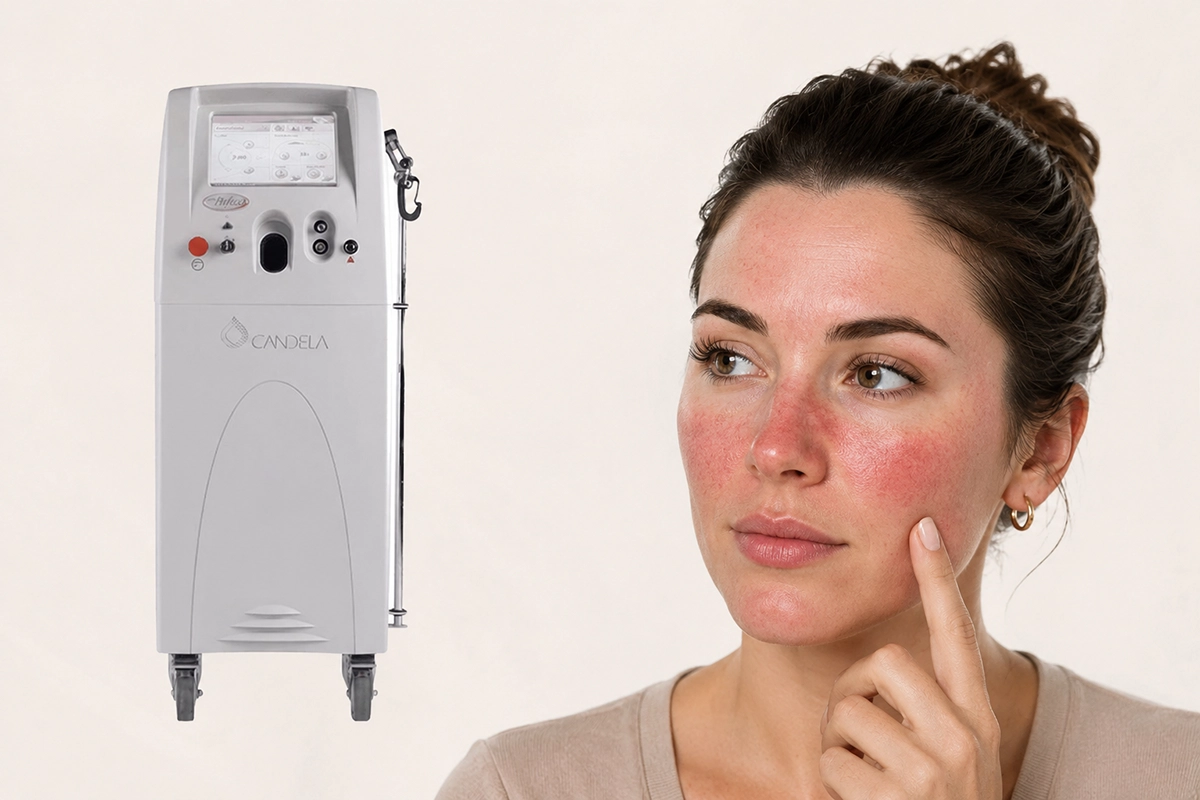
Persistent facial redness, rosacea, port wine stains, and visible blood vessels are deeply personal concerns that can affect how comfortable and confident you feel in your own skin. But in most cases, these skin conditions develop due to factors completely beyond your control.
When blood vessels are overly dilated or damaged beneath the skin’s surface, it can cause visible facial redness. This is largely due to hemoglobin, the pigment that gives blood its red color. High concentrations contribute to rosacea, redness, vascular birthmarks like port wine stains, and other skin conditions. That’s where the Vbeam® laser steps in.
This pulsed dye laser uses a specific wavelength of yellow light to selectively target hemoglobin, without affecting the surrounding skin. The light causes the affected blood vessels to heat up and break down. As the body clears them away naturally, inflammation and visible redness gradually fade, leaving a clearer, more balanced complexion.
The Vbeam laser is FDA-cleared1 to address many vascular conditions with no downtime required. In this guide, we break down the specific conditions Vbeam can treat and the benefits this innovative laser treatment is clinically proven to provide.
What Skin Conditions Can Vbeam Laser Treat?
The Vbeam laser is clinically proven to treat many vascular skin conditions on the face, neck, and chest. A vascular lesion is any area of the skin that differs in color, texture, appearance, or shape from the surrounding tissue. These lesions are mainly caused by abnormal blood vessel formation, and Vbeam is one of the most effective treatments available.
The Vbeam laser is FDA-cleared to treat the following vascular skin conditions:
Here’s a closer look at how the Vbeam laser addresses these conditions:
Facial Redness and Rosacea
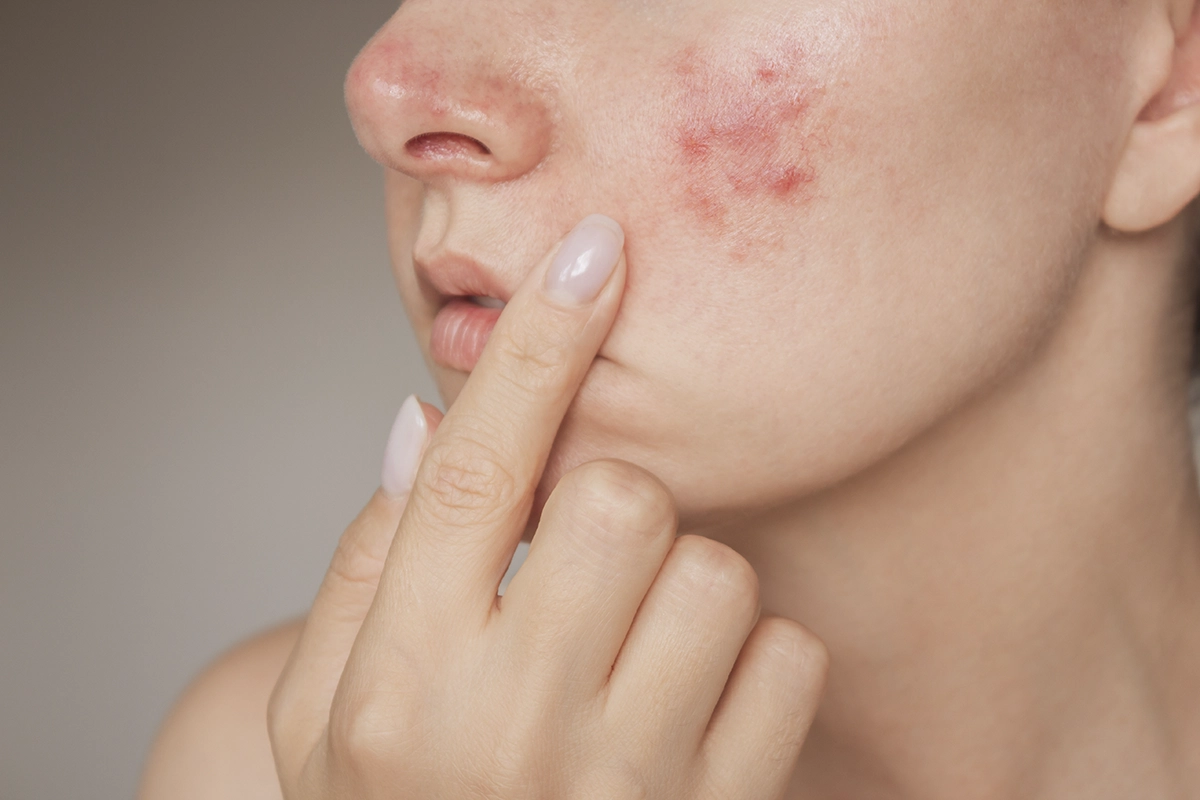
Rosacea is a chronic inflammatory skin condition. It typically manifests on the cheeks, nose, chin, or forehead as persistent redness, visible blood vessels, and small pus-filled bumps. While there is no permanent cure, Vbeam laser treatments are clinically proven to reduce visible facial redness and rosacea significantly.
In fact, clinical studies saw rosacea improve by 75–100% after about 2.6 treatments.2 Most patients see dramatically clearer, calmer skin in just a few sessions.
Broken Capillaries and Spider Veins
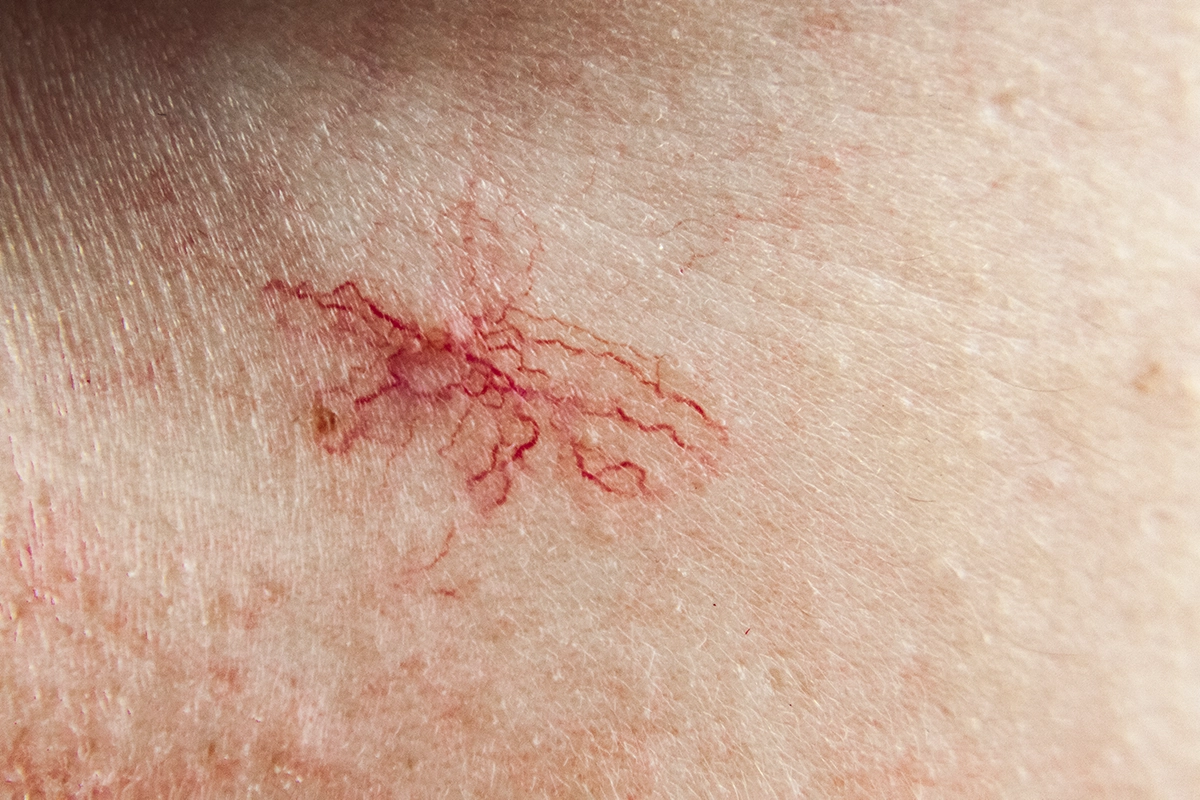
Vbeam laser treatments are clinically proven to treat broken capillaries, also called telangiectasias or spider veins. These are tiny, dilated blood vessels visible just beneath the skin’s surface. They commonly appear as fine red or purple lines on the nose, cheeks, or chin.
One study of patients with facial telangiectasias found that the Vbeam 595nm pulsed dye laser achieved 49% clearance after the first treatment, and 75% clearance three weeks after the third treatment.3 Another study found that just one treatment completely cleared spider telangiectasia in 93% of patients.4
Port Wine Stains and Birthmarks
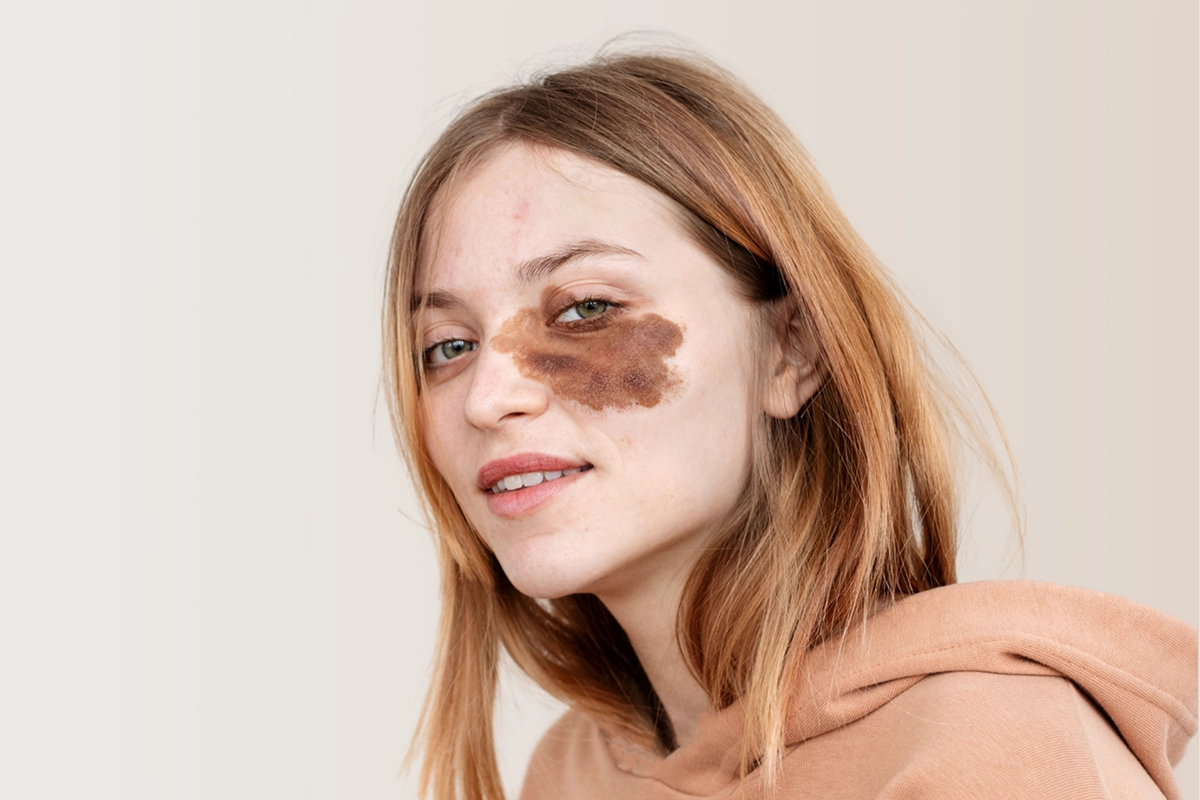
Birthmarks and benign vascular lesions are among the most common reasons people seek Vbeam laser treatments. The Vbeam laser is FDA-cleared to treat a wide range of vascular birthmarks in both infants and adults:
Clinical studies speak for themselves. After a year of treatment with a Vbeam 595 nm laser, port wine stains cleared by 88.6% in infants.5
Benefits of Vbeam Laser Treatments
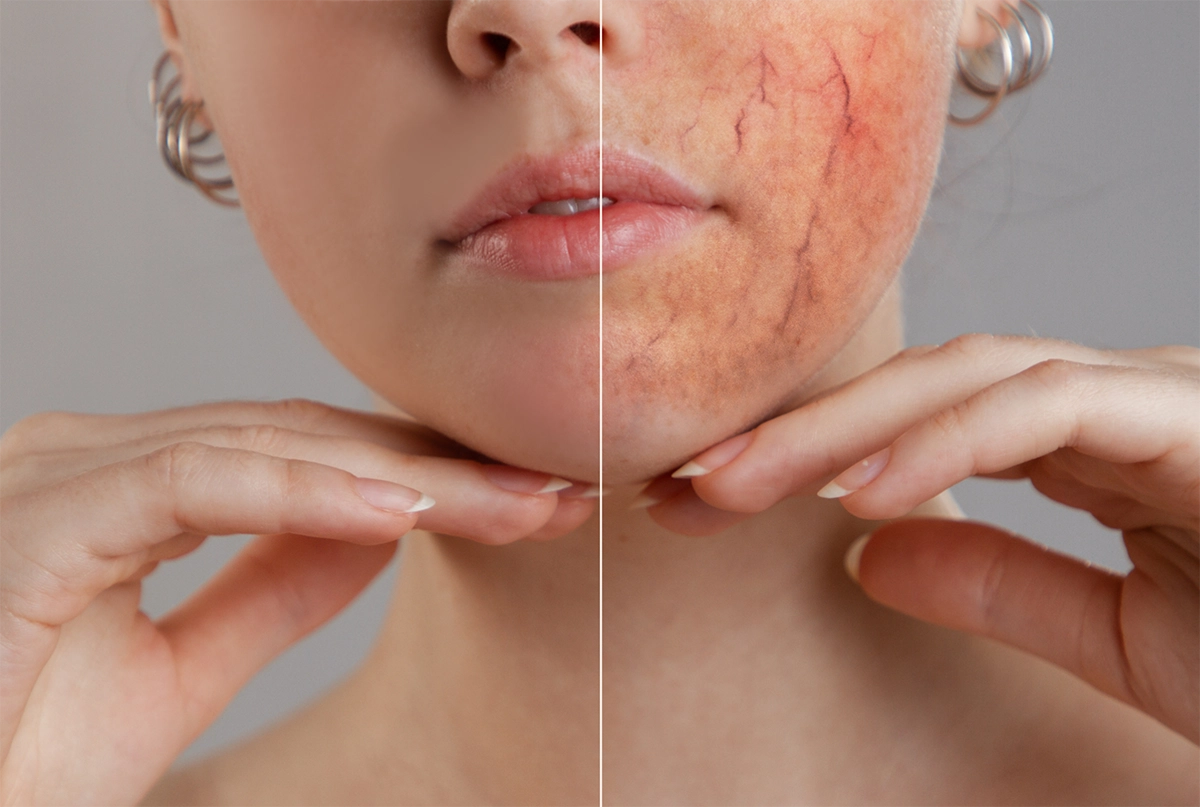
The Vbeam laser is considered the gold standard for treating many vascular skin conditions. Below are some of the main benefits that set it apart from other options on the market:
FDA-Cleared for Most Skin Types
The Vbeam laser is FDA-cleared to treat a wide range of vascular skin conditions and is suitable for most skin types on the Fitzpatrick scale. Effectiveness may vary depending on the specific concern being targeted. During your consultation, your provider will confirm whether Vbeam is appropriate for your skin type and treatment goals.
Clinically Proven to Reduce Redness
The clinical evidence behind Vbeam speaks for itself. Years of peer-reviewed research consistently show measurable improvements across a wide range of vascular skin concerns, from rosacea and broken capillaries to port wine stains and more.2,3
Targets Redness on Face, Neck, and Chest
Vbeam laser treatments aren’t limited to just the face alone. It can also target redness on the neck and chest, making it a versatile option for patients who want a more even, consistent skin tone across multiple areas and conditions.
Instant Cooling Technology for Added Comfort
One of the top advantages of the Vbeam laser is how comfortable it is, even with the powerful results it brings. That’s because it uses a built-in Dynamic Cooling Device (DCD), which sprays the skin with a cooling agent before each pulse. This protects the outer layer of skin from heat and provides a virtually painless experience. Most patients describe the feeling as a quick rubber band snap, followed by a cooling sensation.
You can also request a topical numbing cream or pro-nox for added comfort during treatment.
Non-Invasive with Minimal Downtime
Vbeam laser treatments are completely non-invasive, which means no incisions, no anesthesia, and no downtime required. Some patients may experience mild redness or slight bruising that generally resolves within a few days. You can typically expect to return to your normal routine the same day.
Is Vbeam Laser Right for You? Schedule a Free Consultation at Artemedica Santa Rosa!
Vbeam laser treatments can be an effective way to treat persistent redness, rosacea, port wine stain birthmarks, and many other vascular skin concerns. It’s suitable for most skin types and men and women of all ages.
Schedule a personalized consultation with a qualified professional to find out if Vbeam laser treatments are right for you. At Artemedica, our team will evaluate your concerns and help you find the best treatment option for your goals and budget.
References
- U.S. Food & Drug Administration. (2023). 510(k) SUMMARY. https://www.accessdata.fda.gov/cdrh_docs/pdf23/K230990.pdf
- Halachmi S, Israeli H, Ben-Amitai D, Lapidoth M. Treatment of the skin manifestations of hereditary hemorrhagic telangiectasia with pulsed dye laser. Lasers Med Sci. 2014;29(1):321-324
- Uebelhoer, N. S., Bogle, M. A., Stewart, B., Arndt, K. A., & Dover, J. S. (2007). A Split-Face comparison study of pulsed 532-Nm KTP laser and 595-nm pulsed dye laser in the treatment of facial telangiectasias and diffuse telangiectatic facial erythema. Dermatologic Surgery, 33(4), 441–448. https://doi.org/10.1111/j.1524-4725.2007.33091.x
- Tan, E., & Vinciullo, C. (1997). Pulsed dye laser treatment of spider telangiectasia. Australasian Journal of Dermatology, 38(1), 22–25. https://doi.org/10.1111/j.1440-0960.1997.tb01093.x
- Chapas AM, Eickhorst K, Geronemus RG. Efficacy of early treatment of facial port wine stains in newborns: a review of 49 cases. Lasers Surg Med. 2007;39(7):563-568
- Cohen JL, Geronemus RG. Safety and efficacy evaluation of pulsed dye laser treatment, CO₂ ablative fractional resurfacing, and combined treatment for surgical scar clearance. J Drugs Dermatol. 2016;15(11):1315-1319.